

Local benefits
Supporting Communities
PowerOn Midwest will strengthen reliability across southern Minnesota by better connecting local power lines to the regional power grid, allowing electricity to flow where it is needed most.
Regional energy use
PowerOn Midwest will support communities in southern Minnesota by better connecting the local lines serving local load and generation to the resources of the wider region. Each substation along the PowerOn Midwest route is a key grid connection point where electricity can flow onto or off the transmission system, helping move power between generators and local consumers.
Power will flow in both directions through these lines and substations throughout the year depending on weather conditions. Take a look at the animation: when it is windy in the west and calm in the east, excess power generated by wind turbines in the west will flow on the lines and serve the load to the east. A few hours later when the weather pattern shifts east, the flows reverse and excess power from wind turbines in the east flow to serve customers in the west. This also applies to when customer’s cooling or heating needs increase electricity usage, and when cloud cover impacts solar panel output.
County-by-county energy needs
Minnesota imports and exports electricity over the course of a year. Minnesota is a net importer, meaning 10-20% of Minnesota's electricity comes from outside of the state. Like the state, every county plays an integral role in maintaining a reliable electric transmission grid, importing and exporting power throughout the year. To learn more, view our county-specific factsheets.
County tax revenues
PowerOn Midwest can deliver lasting economic benefits for Minnesota communities through new property tax revenue, potential Power Line Credits for qualifying landowners, and support for energy development that strengthens local tax bases.

Local tax benefits
New transmission infrastructure will generate long-term tax revenue for Minnesota communities. Local benefits may include property tax revenue from transmission infrastructure, Power Line Credits for qualifying property owners, and production tax revenue from generation facilities supported by expanded transmission capacity.

Property tax revenue
High-voltage transmission lines are taxable infrastructure. Once a new line is placed into service, it generates annual property tax revenue for local taxing jurisdictions, including counties, townships and school districts. For planning purposes, transmission infrastructure is estimated to generate approximately $30,000 in property tax revenue per mile each year.*
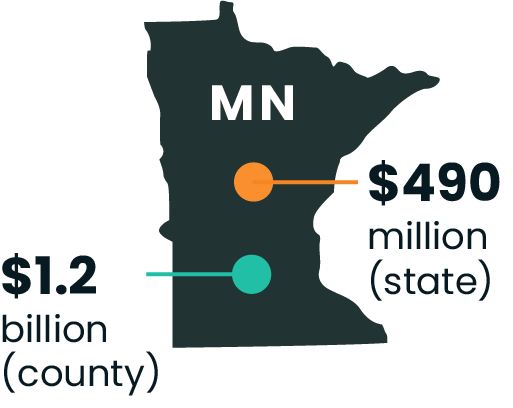
Over the life of a transmission project, this revenue can provide a long-term source of funding for communities that host transmission infrastructure. PowerOn Midwest's economic analysis found that new transmission infrastructure could generate as much as $1.2 billion for counties that host the line and $490 million for the State of Minnesota over the life of the project.
*Actual revenue will vary based on factors such as number of structures, substation location, line voltage, asset value, local tax rates, and jurisdiction.

Power Line Credit
Minnesota's Power Line Credit can reduce property taxes for qualifying property owners whose land is crossed by certain high-voltage transmission lines. Eligible properties may include residential, agricultural, rental, and seasonal recreational property, depending on the voltage and type of transmission infrastructure. The program is funded through taxes collected on qualifying high-voltage transmission lines.
Eligibility and credit amounts vary by property. For details on how the program works and which properties qualify, visit the Minnesota Department of Revenue's Power Line Credit FAQ.*
*This does not constitute tax advice, please see your tax professional for advice about if you qualify.

Wind and solar production tax revenue
Minnesota also collects production taxes from utility-scale wind and solar facilities, with revenue distributed to counties and other local jurisdictions where those facilities are located. Transmission lines do not directly generate these production taxes, but PowerOn Midwest can support this revenue in two ways.
First, added transmission capacity can make it possible to connect new generation sources, including wind and solar facilities, or natural gas and battery energy storage to the grid. As new generation is built and comes online, the communities that host it may receive additional production tax revenue.
Second, PowerOn Midwest can help ease existing grid congestion. When transmission capacity is limited, wind and solar facilities are sometimes curtailed — asked to reduce or stop output — even when they're available to generate electricity. Because production tax revenue is tied to output, curtailment can reduce the tax revenue a county receives from facilities already in service. By relieving that congestion, PowerOn Midwest may help existing wind and solar facilities generate closer to their full potential, which can benefit the production tax revenue those counties already count on.*
*This does not constitute tax advice, please see your tax professional for advice about if you qualify.

How much does my county earn on energy tax credits?
Production tax revenue varies by county based on the type, size and number of wind and solar facilities located there. The Minnesota Department of Revenue publishes county-level Energy Production Tax Data, including interactive maps and annual figures, so residents can see current production tax revenue for their county.
MN Economic Impact Report
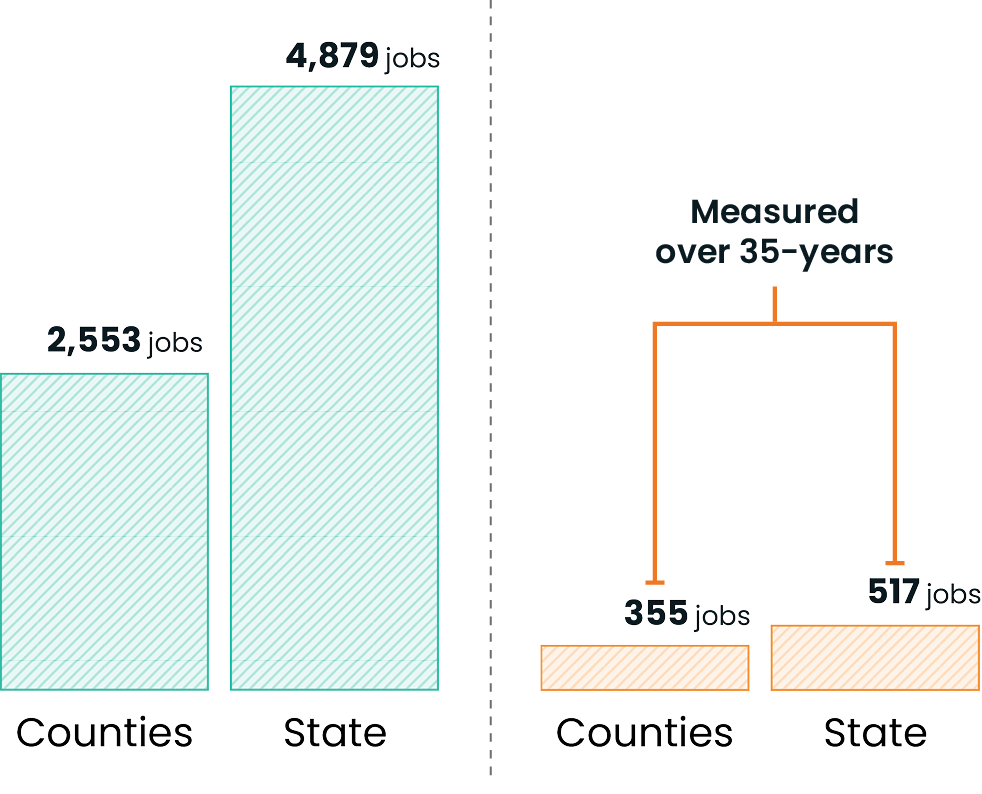
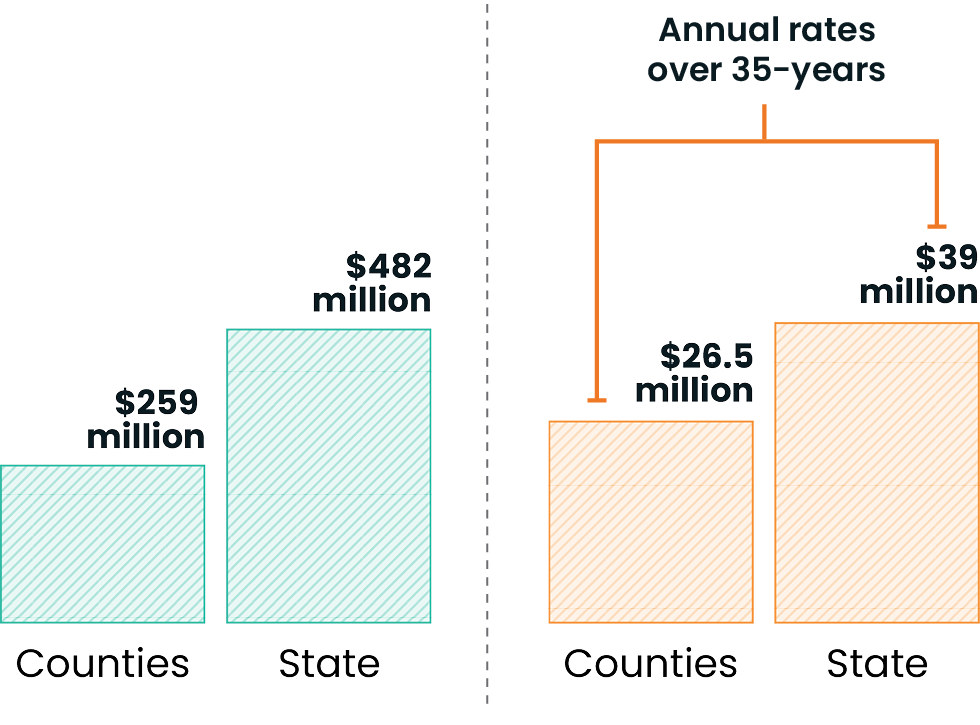
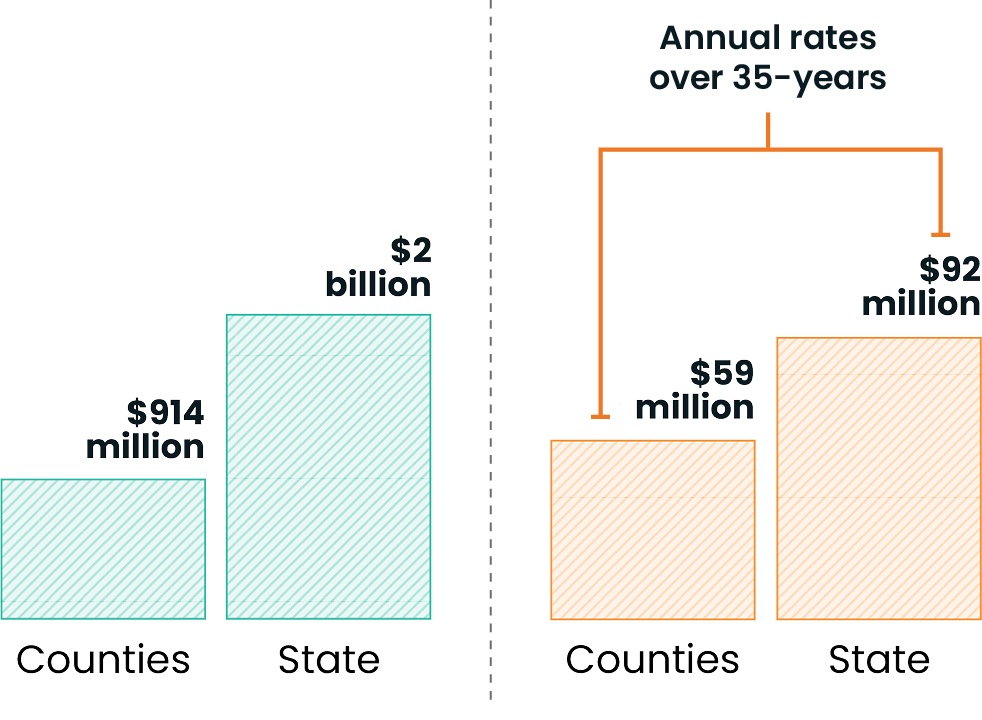
PowerOn Midwest represents one of the largest grid modernization investments in Minnesota history. The project supports thousands of jobs, billions in economic activity, and sustained local tax revenue that benefits schools, counties, and communities for decades to come.
Measuring impact
The Economic Impact Report uses IMPLAN, a nationally recognized economic modeling tool, to measure the broader effects of project spending and benefits. IMPLAN evaluates jobs created (direct, indirect, and induced), labor income (payroll), economic activity generated in local and state economies, and tax revenues at the county and state level. This report represents one of the most comprehensive assessments of how PowerOn Midwest benefits communities across the region.
-
Teal barsShort-term impact
-
Orange barsLong-term impact
Jobs
Payroll
Economic activity
Property taxes
Read the Economic Impact Report
Notes
- Transmission construction impacts were modeled assuming a four-year construction period.
- Long-term and property tax impacts were evaluated over a 35-year timeframe.
- These numbers reflect direct impacts only and do not include additional economic benefits enabled by future development.
What about data centers?
PowerOn Midwest is designed to support reliable electric service for all energy users — from agriculture and manufacturing to healthcare, homes, and growing industries. As demand for electricity increases, the project helps support a grid that can deliver safe, around-the-clock power, regardless of how individual sectors grow or change over time.
Transmission investments like PowerOn Midwest are needed in our region today, regardless of current or future data center proposals. MISO's demand forecast — which identified the need for PowerOn Midwest and other transmission investments — did not include potential growth from new data centers beyond those formally committed in 2023. Even without additional data center development, electricity demand is increasing due to the growing adoption of electric heating and cooling systems, appliances, transportation, and expanding manufacturing. These trends were the primary drivers behind MISO's determination that PowerOn Midwest is needed.
Stay Informed
Sign up for our mailing list to receive news and updates.